
 Català
 Español
Home / Methodology
Our
methodology
Home / Methodology
1/
A holistic,
interdisciplinary and rigorous approach.
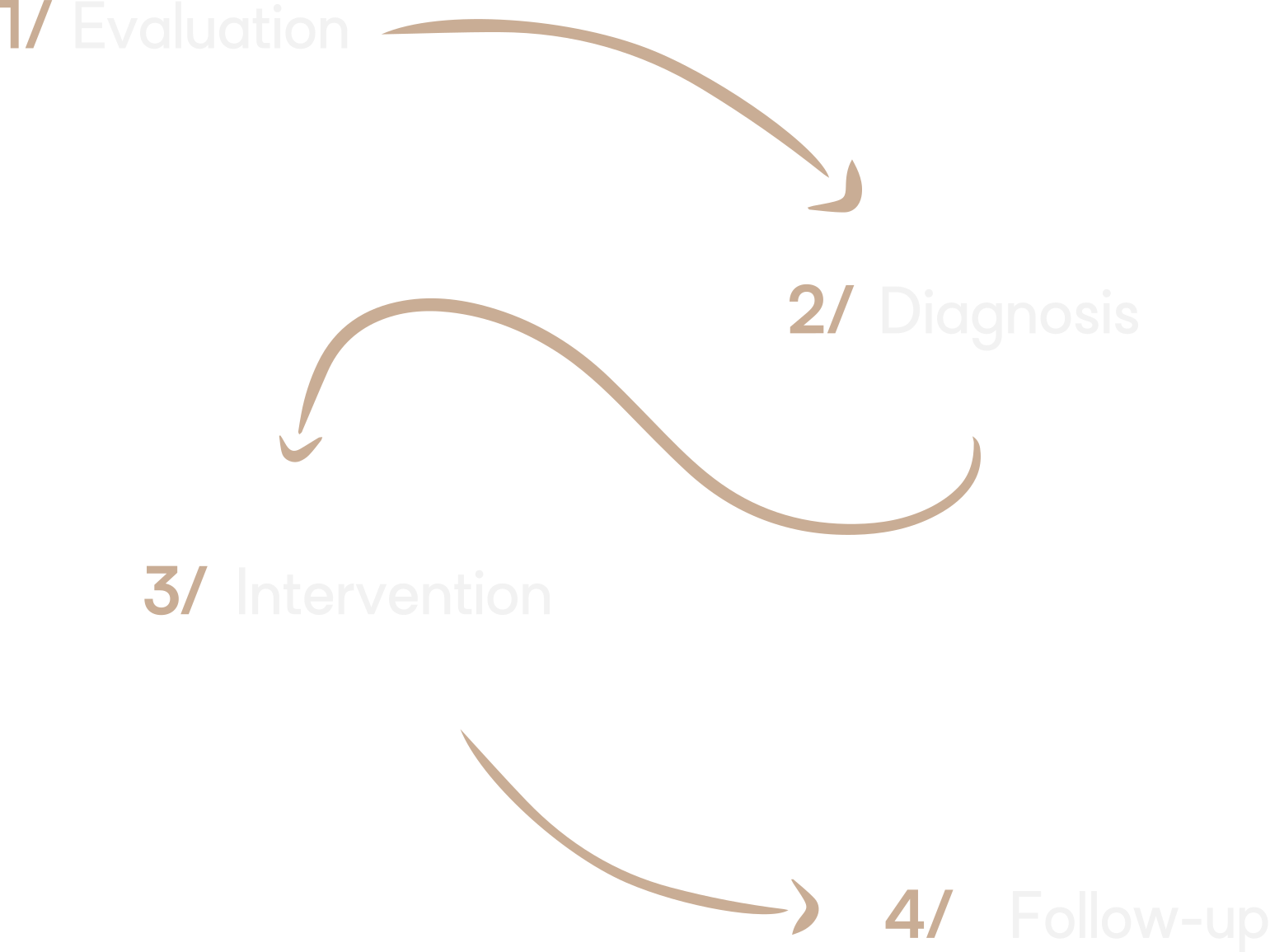
Assessment is an interdisciplinary process that brings together specialisms such as psychology, neuropsychology and speech and language therapy to determine a diagnosis and design the right intervention for each person.
This holistic approach enables us to gain a better understanding of each person’s needs. We assess cognitive functions such as memory, attention, executive functions and language to identify any potential difficulties. We also take into account emotional and behavioural aspects, as well as family and social dynamics that may influence learning and development.

Psychology

Neuropsychology

Speech and language therapy

Educational psychology
ASSESSMENT AREA
CHILDREN
YOUNG PEOPLE
ADULTS
Developmental language disorder (DLD)
✓
✓
✓
Speech disorders
✓
✓
✓
Specific learning disorders
✓
✓
✓
Acquired speech and language disorders
✓
✓
✓
Attention deficit hyperactivity disorder (ADHD)
✓
✓
✓
Autism spectrum disorder (ASD)
✓
✓
–
High abilities
✓
✓
–
Emotional and behavioural difficulties
✓
✓
✓
2/
Innovation and rigour in identifying learning,
neurodevelopmental and personality disorders.
AFTER THE ASSESSMENT,
THREE OPTIONS ARE CONSIDERED:

Intervention proposals through personalised action plans.

Advice and guidance for the family and school as needed.

Referral to other professionals

3/
An active approach centred
on discovery and participation.
At Trivium, we work to develop intervention programmes that take into account areas of difficulty as well as strengths and personal interests.
This involves using methods and techniques that best suit each person’s learning style, integrating their passions and motivations into the therapeutic process.
When it comes to learning difficulties, our approach is practical and person-centred, taking into account their family and immediate environment.
We work to improve communication and spoken and written language, taking into account the impact they can have on learning and socio-emotional wellbeing.
We address individual emotional needs and help families resolve specific crises within their relationships, which may arise during the family life cycle.
Self-control or emotional self-regulation has multiple benefits for personal, social, academic and professional life, as well as health. The ability to form social bonds has a very positive effect on our wellbeing and supports brain health.
Why can working in pairs or small groups be an effective strategy within an individualised intervention model? What does the scientific evidence say?
Working in pairs or small groups is particularly beneficial for children with neurodevelopmental and learning disorders, such as dyslexia, dyscalculia, ASD or ADHD. Scientific evidence shows that it can be as effective as individual intervention, while also promoting the development of social, communication and emotional skills in more natural settings. When children have similar but complementary difficulties, they can support one another and build shared learning through cooperation. This type of dynamic enhances communication, self-esteem and motivation, and provides more opportunities to express themselves, receive immediate feedback and observe useful strategies in other children. In addition, working in small groups helps reduce isolation and normalise difficulties, helping children better manage the frustrations associated with their learning process and the emotions that may arise when they see themselves struggling more than their peers.
4/
Once the intervention has been completed and the agreed objectives have been achieved, it is important to carry out regular reviews to assess the person’s progress. This follow-up makes it possible to evaluate whether the changes achieved are maintained over the long term and how effective the strategies used have been. If necessary, additional tests can be carried out to update the data and the neuropsychological and/or speech and language therapy report.
It is also recommended to maintain communication with educational settings or other relevant environments to ensure that people continue to receive appropriate support.

The therapeutic approach at Trivium is based on recognising and valuing the uniqueness of each individual.


