 Català
 Español


Study techniques and
learning strategies
Study techniques are tools and resources that help optimise the time spent studying, improving comprehension, retention and the ability to apply what has been learnt. They are useful at every stage of education and help develop independence, organisation and effective working habits.
Some of the most common techniques include underlining key ideas to make texts easier to understand; creating outlines and concept maps to organise information visually; writing summaries in your own words to encourage active learning; spaced repetition to consolidate long-term memory; planning time and scheduling tasks to avoid last-minute studying; completing self-assessments and practice tests to prepare confidently for exams; and using mnemonic techniques, such as acronyms or visual associations, to remember specific facts.

Areas we work in

Mathematical
competence

Spoken and written
language skills

Executive functions:
organisation, planning,
time management.

Attention

Memory

Motivation
Areas of work


Educational
stages

Upper Primary
Education

Compulsory Secondary Education

Sixth Form

University studies

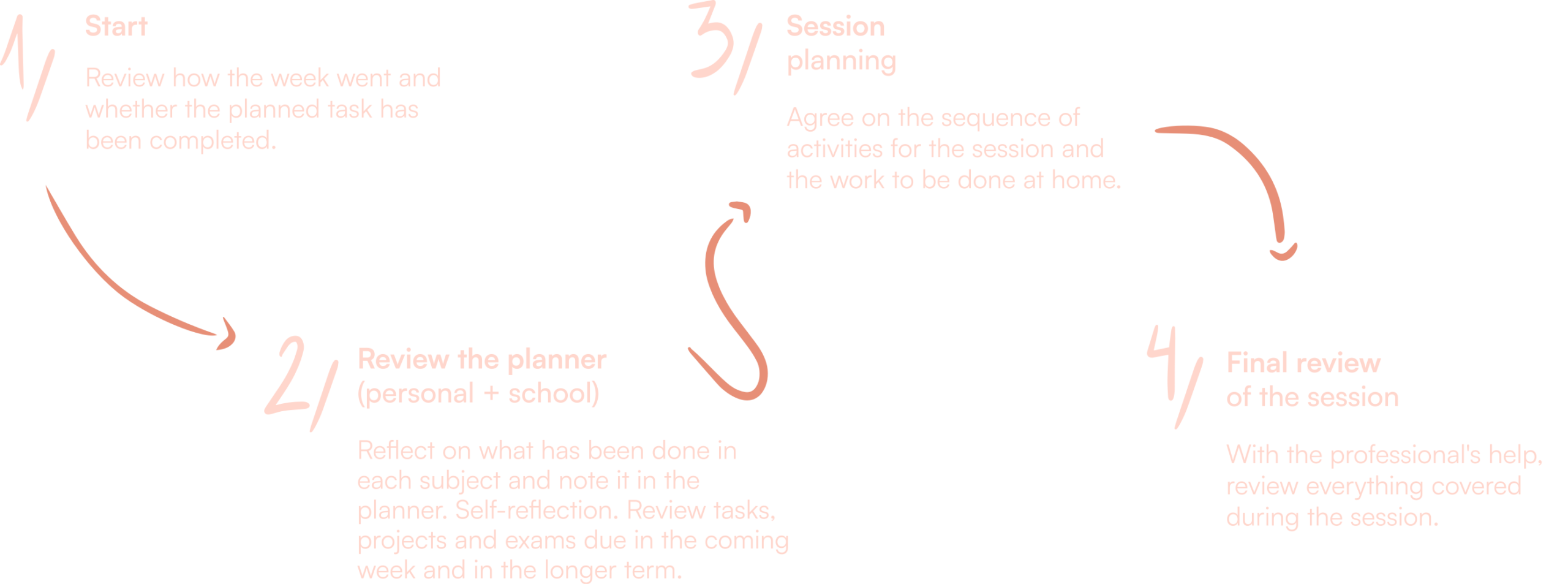
How are the sessions structured?
Session duration:
1 hr 30 mins (once or twice a week)